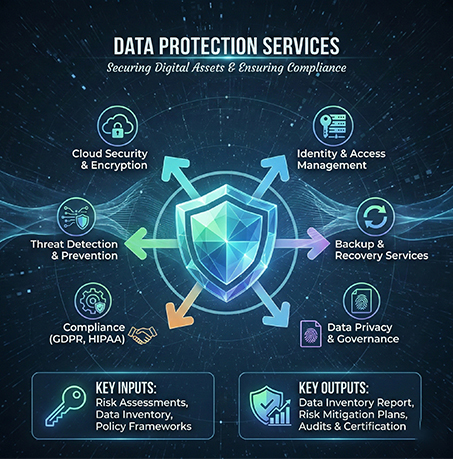
Data Protection Services


In the modern digital landscape, data has become one of the most valuable assets for organizations. Businesses collect, store, and process large volumes of sensitive information, including customer records, financial data, intellectual property, and operational details. Protecting this information from unauthorized access, loss, or misuse is essential for maintaining trust and ensuring business continuity.

Data protection refers to the strategies, technologies, and policies used to safeguard sensitive information from theft, corruption, or unauthorized exposure while ensuring data remains available when needed.

A strong data protection framework helps organizations reduce cyber risks, comply with regulations, and maintain operational resilience in an increasingly threat-driven environment.
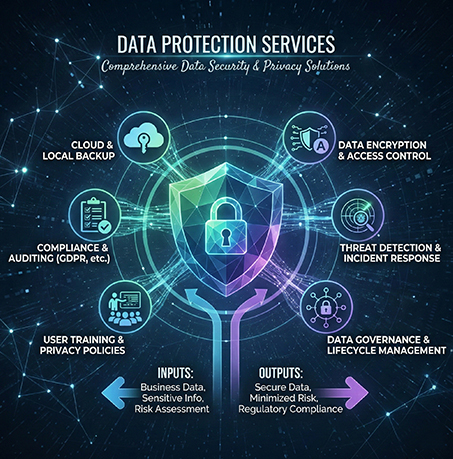
Why Data Protection is Important


Organizations today face growing cyber threats, regulatory requirements, and privacy expectations. Without proper safeguards, data breaches can result in financial losses, legal penalties, and reputational damage.

Effective data protection helps organizations:

  • Prevent unauthorized access and data breaches
  • Protect customer and employee privacy
  • Maintain business continuity during disruptions
  • Ensure regulatory compliance
  • Safeguard intellectual property and confidential data
  • Strengthen customer trust and brand reputation

Protecting information is fundamental to maintaining privacy and security in digital environments and reducing risks associated with cyber incidents.

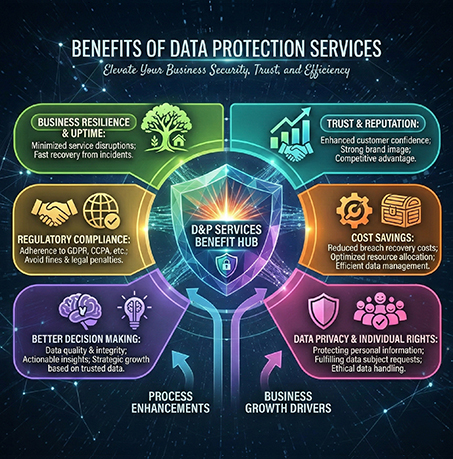
Benefits of Data Protection Services


Implementing a strong data protection strategy delivers measurable advantages:

  • Reduced risk of cyberattacks and data breaches
  • Improved operational resilience
  • Enhanced regulatory compliance readiness
  • Better incident response capabilities
  • Increased customer confidence
  • Secure digital transformation initiatives

Data protection combines security and recovery practices to keep information safe, intact, and accessible.

Frequently Asked Questions (FAQs)

Data protection involves policies, technologies, and procedures used to safeguard sensitive data from loss, theft, or unauthorized access.

It prevents breaches, ensures compliance, and protects customer trust while maintaining operational continuity.

Yes. Many privacy regulations mandate secure handling, storage, and processing of personal data.

Data privacy governs how data is collected and used, while data protection focuses on securing that data from threats.