Global Standard for Data Privacy and Protection


In today’s digitally connected economy, data has become one of the most valuable assets for organizations worldwide. Businesses collect, process, and store massive volumes of personal and corporate information every day. However, with growing cyber threats, regulatory requirements, and consumer awareness, global standards for data privacy and protection have become essential for maintaining trust, compliance, and operational security.

Data privacy refers to how personal information is collected, used, stored, and shared responsibly. Data protection focuses on safeguarding that information against unauthorized access, misuse, loss, or breaches. Together, they form the foundation of modern cybersecurity governance.

Organizations operating internationally must now align with global privacy frameworks such as GDPR, ISO standards, and regional data protection laws. Implementing standardized privacy practices not only ensures compliance but also strengthens brand credibility and customer confidence.

Why Data Privacy and Protection Matter


Modern organizations depend heavily on digital ecosystems including cloud computing, mobile applications, AI systems, and online platforms. Without strong privacy controls, sensitive data becomes vulnerable.

Major Reasons Data Protection is Critical

  • Increasing Cyber Threats – Data breaches and ransomware attacks are rising globally.
  • Legal Compliance – Governments enforce strict privacy regulations with heavy penalties.
  • Customer Trust – Users prefer businesses that protect their personal information.
  • Business Continuity – Data loss can disrupt operations and damage reputation.
  • Financial Protection – Security incidents can result in massive financial losses.

Strong privacy frameworks reduce operational risks while enabling secure innovation.

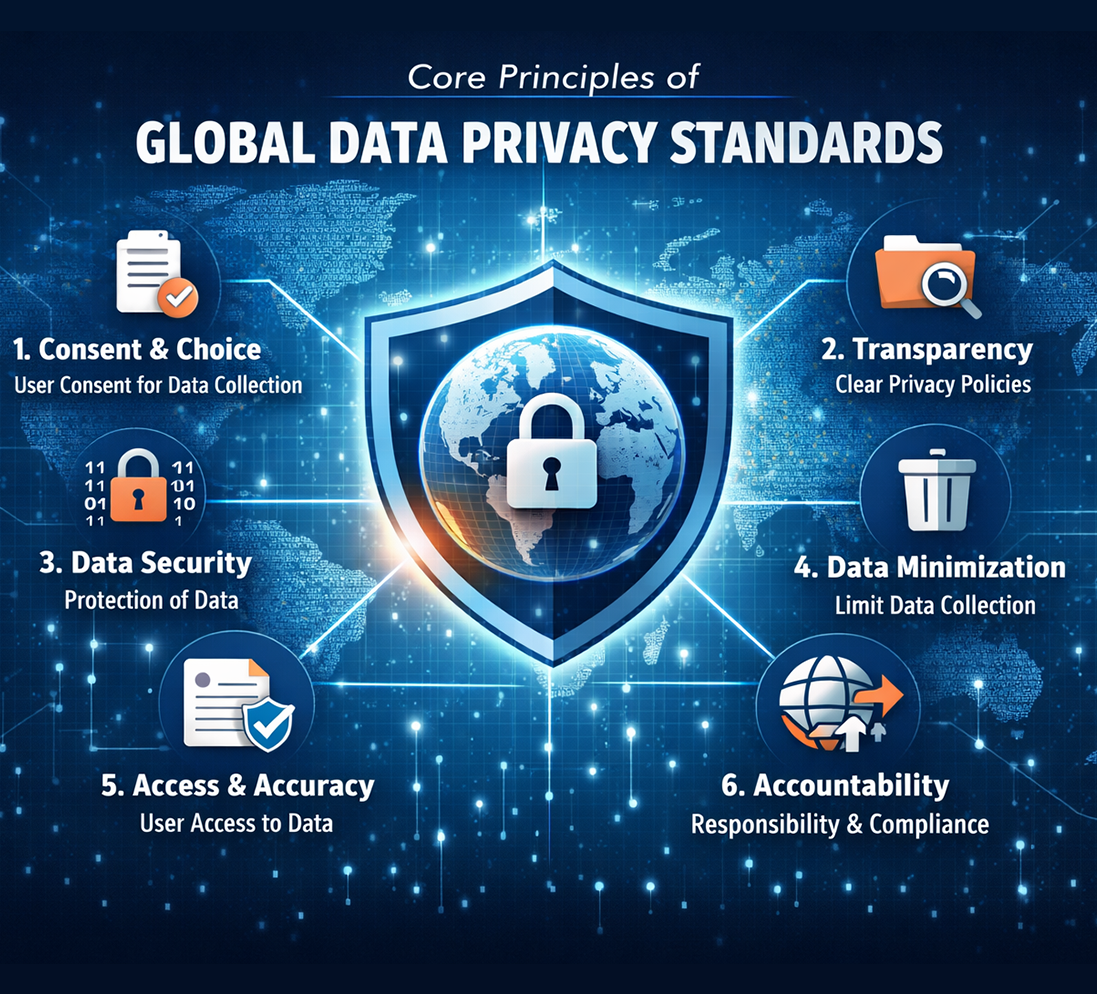
Core Principles of Global Data Privacy Standards


Global privacy regulations share common foundational principles regardless of region.

Lawfulness and Transparency

Organizations must clearly inform users about how their data is collected and used.

Purpose Limitation

Data should only be collected for specific, legitimate purposes.

Data Minimization

Only necessary data should be collected to achieve business objectives.

Accuracy

Information must remain updated and accurate.

Frequently Asked Questions (FAQs)

Data privacy refers to the responsible handling of personal information, while data protection focuses on securing data from unauthorized access or breaches.

They ensure consistent protection of personal information across countries and help organizations comply with international laws.

Examples include GDPR, CCPA, and ISO/IEC 27701 privacy standards.

Personal data includes any information that identifies an individual such as name, email, phone number, or location data.

Encryption converts information into coded format, making it unreadable without authorization.